Specialist in Elementary Music Therapy
Abschnittsübersicht
-
-
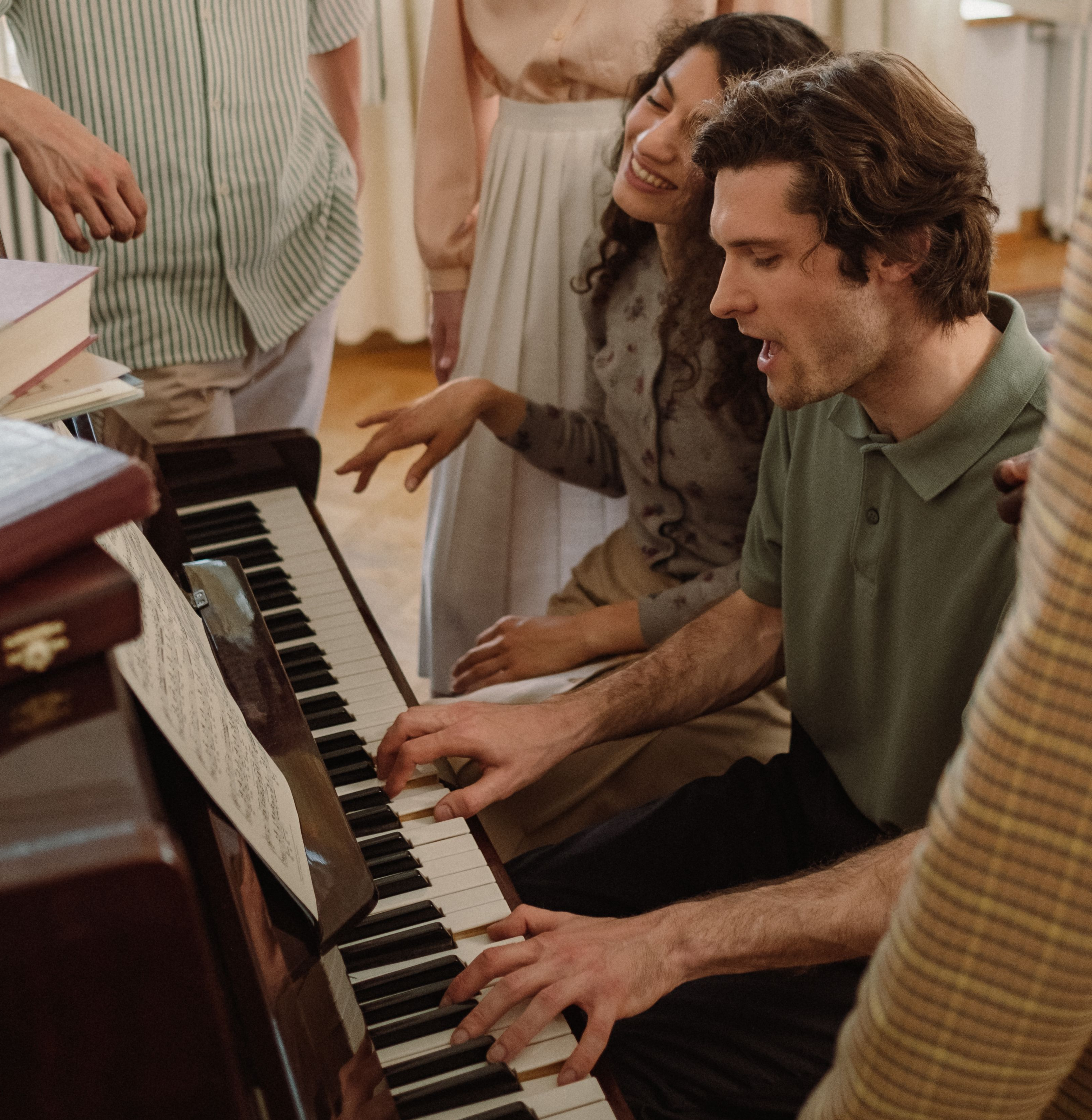 With training as a specialist in elementary music therapy, you will be able to incorporate music therapy elements into your work across a wide variety of fields.
A “specialist in elementary music therapy” is someone who applies music-based and elementary therapeutic methods in educational, social, or clinical professional settings. They enrich the lives of many people through music in a wide variety of settings.
This is a practice-oriented additional qualification.
Link to fields of application for music therapy:
Fields of Application:- Kindergartens, schools, special education schools, youth centers
- Hospitals, rehabilitation centers, facilities for people with disabilities, and senior care facilities
- Crisis support and resilience-building in the social sector
You will use musical tools such as rhythm, voice, and simple instruments in a targeted manner to support people in educational, care, or social settings.This continuing education program is designed for people who wish to use their musical talent to support, empower, and accompany others, without pursuing a psychotherapeutic focus.
Music accompanies us from the beginning to the end of our lives. It serves as a steadfast anchor, even in times of crisis; it comforts, invigorates, fosters growth, and strengthens resilience.
Actively making music, singing, and improvising support personal growth and the development of creativity and imagination.
Music improves well-being and perceptual abilities, thereby enhancing quality of life. Making music together can help release emotional blockages and open up new avenues for connection.
Music therapy elements can be used preventively to address physical and/or psychological symptoms.
This continuing education program is suitable for:
- Early childhood educators
- Teachers
- Social educators
- Music teachers
- Psychotherapists
- Occupational therapists
- Speech-language pathologists
- Nurses
- Special education teachers
- Geriatric caregivers
- Care workers
- Volunteers
- and many more
Course Content:- Introduction to basic music therapy tools
- Use of voice, rhythm, and sound work
- Basic music therapy applications in a wide variety of settings (e.g., children, seniors, people with disabilities, and many more)
- Practical tools for everyday professional practice
Prerequisites:- Basic musical training
- Proficiency in at least one instrument
- Good interpersonal skills
- Ability for (self-)reflection
- Interest in the field of health care
- Sensitivity/empathy
- Social aptitude
- Perseverance/patience
The continuing education program is designed as a self-study course, which means you can start at any time and learn at your own pace. It consists of online courses and numerous practical tools.
At the end of each module, there is a multiple-choice online module exam; upon successful completion, you will receive the certificate “Specialist in Elementary Music Therapy.”
Duration of study: With a study load of approximately 4–6 hours per week, you can complete the “Specialist in Elementary Music Therapy” continuing education program in about 4–6 months.
Total cost of the continuing education program: €1,786,-; 2.000,-USD
If you decide to continue on to the full music therapy training program, the modules you have already completed will, of course, be credited toward your degree.
Your benefits with us:

- All courses are offered exclusively online, saving you time and money.
- Since this is a self-paced program, you can learn at your own pace.
- With a wide range of tools and carefully developed course materials, we offer you a strong practical focus that makes it easier for you to enter the workforce.
- Our curriculum is aligned with college-level coursework, ensuring you receive a well-rounded, comprehensive education that’s easy to understand.
- All fees are all-inclusive and cover online access, module exams, certificates of participation, and diplomas.
- You can complete this program, as well as all continuing education courses, while working.
Our school offers all programs as a modular system. For you, this means:
- You can book each course individually. This is a great option if you’d like to further your education in specific subject areas.
- Within the modules, individual courses are grouped by subject focus. These modules can also be booked individually.
- In addition to the Music Therapist training program, we also offer specialized continuing education programs to become a Specialist in Children’s Music Therapy and a Specialist in Elementary Music Therapy.
- We have put together the corresponding modules for the following programs: Music Therapist (6 modules); Specialist in Elementary Music Therapy (2 modules); Specialist in Children’s Music Therapy (12 courses).
- All courses and modules can be combined with one another and will be credited toward the corresponding complete training programs.
Curriculum for the continuing education program
-
-
Module
Course List 1

- Introduction to Music Therapy
What Is Music Therapy?
The Origins and Development of Music Therapy
The Effects of Music on the Mental, Emotional, and Physical Levels
Areas of Application for Music Therapy
Music Therapy and Other Therapies - Active Music Therapy
Definition of Active Music Therapy
Forms of Active Music Therapy
Contents of Active Music Therapy
Therapy Examples - Active Music Therapy Exercises
A Selection of Active Therapeutic Music Exercises - Receptive (Passive) Music Therapy
Definition of Receptive Music Therapy
Forms of Receptive Music Therapy
Areas of Application for Receptive Music Therapy - Receptive Music Therapy Exercises
A Selection of Receptive Therapeutic Music Exercises - Introduction to Playing Easy-to-Play Instruments
Use of Orff Instruments
Classic Orff Instruments
Instructions for Stick Games
Basic Rules for Using Orff Instruments
Areas of Application for Orff Music Therapy
Goals of Orff Music Therapy
Basic Principles of Orff Music Therapy
Examples of Therapeutic Exercises for Children, Adolescents, and Adults - Hearing and Perception
Hearing and Perception
Structure and Function of the Ears
The Beginnings of Hearing and Speech
Connections Between Hearing and the Brain - The Healing Effects of Sounds
Definition of Sound Therapy
Hearing and Healing
Holistic Healing
Various Methods of Sound Therapy
Audio-Psycho-Phonology
Lambdoma Sound Therapy
Singing Bowl Massage
Sound Furniture
Sound Trance
Sound Therapy Exercises
Module Exam 1
Module Price: 846,-€; 948,-USD (including exam)
Course List for Module 2- Children’s Music Therapy

Definition of Children’s Music Therapy
Origins and Development of Children’s Music Therapy
Components of Children’s Music Therapy
Music in Child Development
The Effect of Music in Children’s Music Therapy - Practical Application of Children’s Music Therapy
Goals of a Music Therapy Session
Content of a Music Therapy Session
Teaching Songs
Rhythmic Movement Sequences
Sound Experiments with Instruments
Song Stories
Listening to and Interpreting Music
Examples of Suitable Musical Works
Suggestions for the Structure of an Advanced Therapy Session - Tools for Children’s Music Therapy
This course is divided into different areas of support.
For each area of support, you will find various music therapy activities and examples for structuring a music therapy session. - Music Therapy for Auditory Perception Disorders
Definition: Auditory Perception Disorder
How do auditory perception disorders manifest?
Diagnosis of Auditory Perception Disorders
Prevalence of Auditory Perception Disorders
Support Options Through Music Therapy
What the Therapist Should Keep in Mind
Music Therapy Exercises and Examples - Music Therapy with Traumatized Children
Trauma as a Clinical Condition
Definition
Forms of Trauma
Symptoms of Traumatization
Consequences of Trauma
Treatment Approaches Using Music Therapy
What the Therapist Should Keep in Mind
Music Therapy Exercises
Session Plan - Music Therapy with Individuals on the Autism Spectrum
Definitions of Autism
Symptoms and Clinical Picture of Autism Spectrum Disorders
Causes of Autism
Music Therapy for Autism
What the Therapist Should Keep in Mind
Therapy Examples
Music Therapy Exercises - Music Therapy with Seniors
Music Therapy with Seniors
Areas of Application for Music Therapy with Seniors
Different Forms and Effects of Dementia
Age-Related Dementia and Music Therapy
The Music Therapy Process with Seniors
Effects of Music Therapy on Seniors
What the Therapist Should Keep in Mind
Music Therapy Tools for Seniors
- Music Therapy with People with Intellectual Disabilities
Definition of Intellectual Disability
The Practice of Music Therapy with People with Intellectual Disabilities
Areas of Development for People with Intellectual Disabilities
Music Therapy Exercises
Music Therapy with People with Severe Multiple Disabilities
What the Therapist Should Keep in Mind
Music Therapy Improvisation Techniques with Exercises
Practical Examples
Music-Based Communication
Module Exam 2
Certificate
Module Price: €940, 1.050,-USD (including exam)
- Introduction to Music Therapy
-